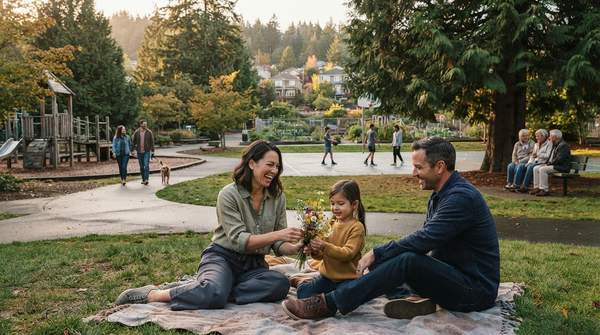
The park you pick matters more than you might think. A pocket park down the street is perfect for a shaded breather but a poor choice for a soccer practice; a regional park can offer a lake and miles of trails but demands a drive. Local public parks fall into a handful of common classifications—pocket, neighborhood, community, and regional—each with its own scale, service radius, and set of amenities. Knowing which type fits your activity is the fastest way to land somewhere you'll actually enjoy.
Understanding Local Public Parks: A Guide to Types and Activities
A public park, as the Santa Clara Valley Open Space Authority defines it, is an outdoor space offering both passive and active recreation amenities, along with education and conservation opportunities. Classification depends largely on how the park is managed: neighborhood parks are generally run by city governments, while regional parks are usually managed at the county level.
A recreation management textbook by Beggs, Mull, Renneisen, and Mulvaney frames it simply: parks range in size, shape, function, and amenities, and the most common public parks can be classified as neighborhood, urban, community, regional, linear, state, and national. Most are owned and operated by some form of government, supported by tax dollars, fees, or donations. This article focuses on the local tiers—pocket through regional—since those are the parks most people encounter on an ordinary afternoon. State and national parks, managed at higher levels of government, and revenue-driven specialty parks like theme parks sit outside this comparison.