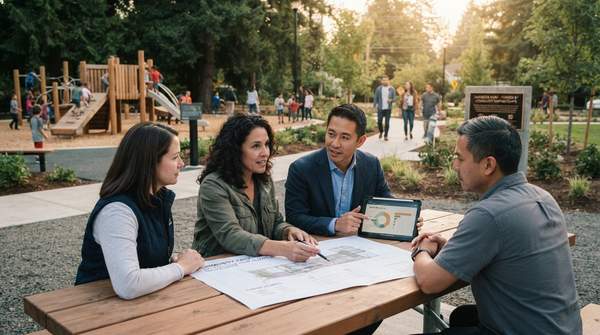
Local park upgrades are rarely paid for by a single check. Instead, a new playground, trail, or renovated recreation center is typically financed through a combination of federal grants, state programs, municipal budgets, and private or non-profit contributions. Understanding this layered model matters for another reason, too: most of that money covers building the park, while the ongoing cost of keeping it clean, safe, and staffed is a separate challenge that agencies frequently struggle to fund.
Understanding the Multi-Layered Funding for Park Upgrades
When a city or town upgrades a park, the money usually arrives from several directions at once. A useful example comes from Delaware, where funding for Newark's Curtis Mill Park came from multiple sources: the City itself, the state environmental agency, a brownfield grant fund, the Land and Water Conservation Trust Fund, the state transportation department, and a state bond bill. That single project shows how a modest neighborhood park can draw on city, state, and federal streams simultaneously.
Delaware's planning guidance for local governments describes this landscape directly: park and recreation project funds often come from a variety of sources, including federal, state, and local government programs, alongside institutional support, private partners, and recreation program fees. For residents, the practical takeaway is that a proposed project's viability often depends less on one big grant than on a department's ability to assemble a funding stack from several programs at once.