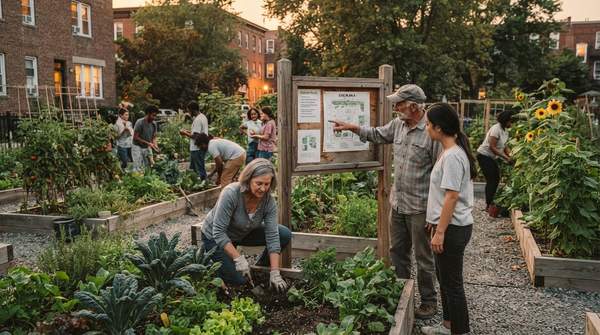
Community gardens generally fall into two broad management models, and which one you join shapes almost everything about your experience: how much autonomy you have over your plot, how many hours you are expected to contribute, and who decides the rules. Research on garden governance, including a study of gardens in Austin, Texas, distinguishes between "top-down" gardens managed by an external organization and "bottom-up" gardens run by the gardeners themselves. Knowing which model a garden uses—and how it handles plots, labor, and decision-making—is the single most useful thing a prospective member can learn before signing up.
Introduction to Community Gardens and Their Appeal
Community gardens give people without their own land a place to grow food, flowers, and connections. A University of Missouri Extension guide describes the most common form, the neighborhood community garden, as land divided into plots for individual and family use. These gardens can also occupy sites at churches, social service agencies, food pantries, and food banks, sometimes bringing together both neighbors and the clients or members of the hosting institution. What draws people in varies: fresh produce, a patch of green, or the social fabric of working alongside others. A study of New York State gardeners, published in Frontiers in 2022 by Tomasz Falkowski and colleagues, captured that appeal in gardeners' own terms, with participants describing the experience as "connecting with good people and good plants."
Understanding Community Garden Management Models
Not every garden is run the same way, and researchers who study garden governance have found the differences matter. The Austin, Texas study drew on the work of Fox-Kämper and colleagues (2018) to categorize gardens by who holds authority. In some gardens, a governmental or non-profit organization manages everything, including decision-making, and either hires workers or seeks volunteers to run day-to-day operations. In others, community members manage and operate the garden themselves—sometimes exclusively, sometimes with paid or informal help from professionals. These are general categories, not rigid boxes. Many real gardens blend approaches, and the same garden may lean more heavily on professional support during its planning and establishment stages before shifting toward community control.