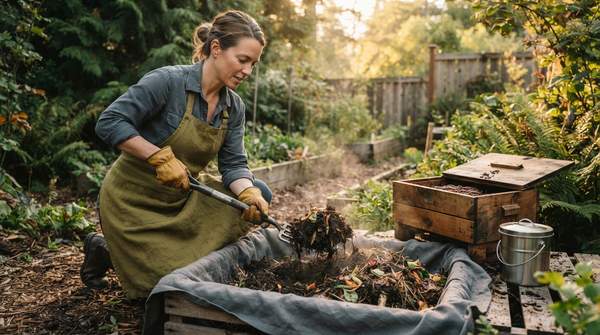
The best home composting method is the one that matches three things you already know: your space, your time, and your waste. If you have a yard, a simple backyard pile or bin handles yard trimmings and kitchen scraps with minimal fuss. No yard? A worm bin kept under a sink or in a closet quietly eats your food scraps, or a sealed Bokashi bucket ferments nearly all of your kitchen waste indoors, pickling it into "pre-compost" you later mix into soil. This guide walks through each option and closes with a consolidated list of what belongs in the bin and what doesn't.
Choosing Your Home Composting Method: A Decision Framework
The US EPA defines composting simply: the "managed, aerobic (oxygen-required) biological decomposition of organic materials by microorganisms." Every method below is a variation on that managed process—one with worms doing most of the work, one with fermentation bacteria in an airtight container, and the classic one with microbes in an outdoor pile.
A home composting guide from South Carolina's Department of Environmental Services frames the selection well: before choosing, ask yourself how much space you have at home, what material you will be composting, and how much time and effort you can give the project. Those three questions, the guide says, point you toward the method that works best for you—and backyard composting, it notes, is the most common choice for home composters.
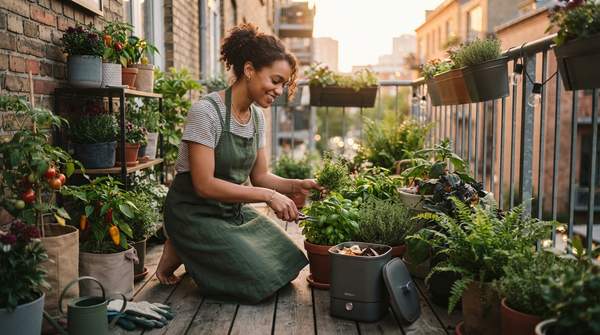
So start there. Answer the three questions honestly, then use the selector below to map your answers to a method. A renter with a balcony and only vegetable peels has a very different fit than a homeowner with autumn leaves and garden trimmings piling up each fall.